What is a Mudang
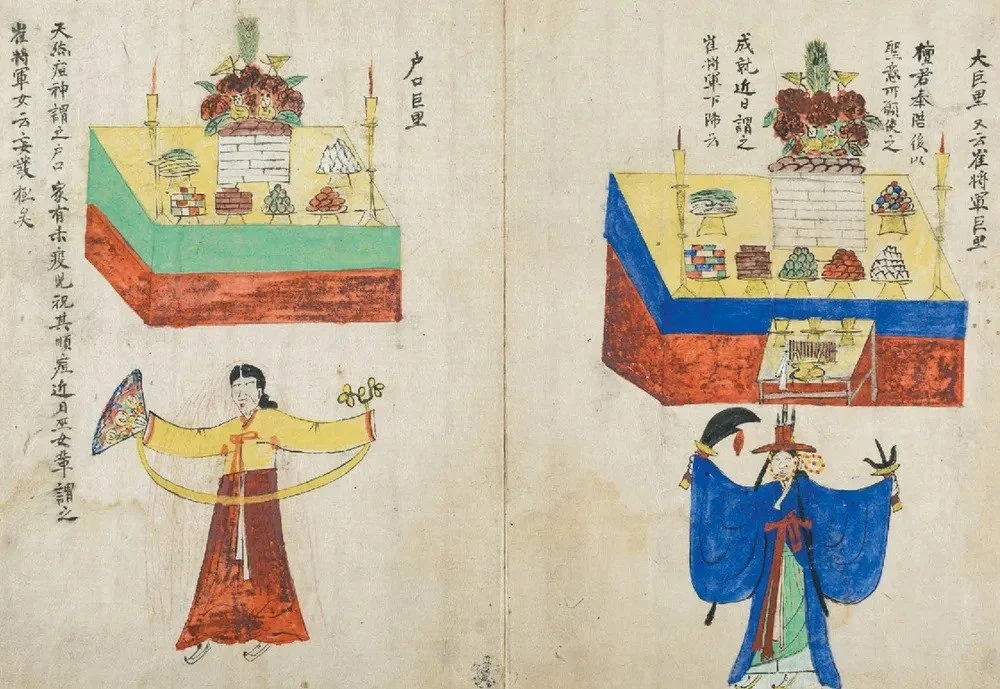
Not my image, from Google
Simply put, mudangs are Korean shamans.
Online definitions describe mudangs as spiritual intermediaries, mediators between the human realm and the spirit world. In other words, mudangs are spiritual messengers and guides. Whether connecting with gods, ancestors, spirits, or the soul, we work with the energetic forces that move around and within us.
Mudangs are accepted into lineage under an elder who has undergone initiation themselves. It is a closed practice. Becoming a mudang requires initiation, apprenticeship, and years of honing one’s specialty. A mudang does not declare herself into existence. She is recognized, tested, and brought in. There is an elder. There are witnesses. There are spirits who must test, accept and hold the initate.
Some mudangs experience the opening of their “talk door,” mal-mun (말문), the speech channel of the spirits. During naerim initiation, the mal-mun is said to open. For others, whose initiation has long been overdue, that door may have been open for years. When a mudang delivers messages in ritual, ceremony it is called gong-su (공수) specific channeled transmissions from the spirits.
There are different types of mudangs. Some inherit ritual authority through family lines, known as sessŭmu. Others are called through possession and initiation, charismatic gangshinmu. In practice, these distinctions are not always rigid. Blurred lines. What remains constant is the structure: calling, recognition, initiation, and responsibility.
A mudang is someone who has been called, trained, and accepted to mediate between visible and invisible realities. This is not aesthetic spirituality. It is a lineage-based practice rooted in land, ritual, and relational accountability. The role carries obligation and weight to spirits, to community, and integrity.
